Sustainable AI for data quality at Triodos Bank
Designing a value-driven data quality platform with AI assistants for a bank that supports 750,000+ customers in Europe.UX Research • UX DesignBackground
Triodos Bank is a sustainable bank located in the Netherlands. I collaborated with them for my Master's thesis, focusing on discovery of sustainable AI practices. Financial institutions are adopting AI to increase speed and throughput in risk and data operations. At Triodos Bank, this opportunity had to be balanced with clear values: sustainability, transparency, and human responsibility.
In collaboration with Triodos, I explored how data quality workflows could be redesigned into a shared platform instead of fragmented local practices. The result is a concept for the Triodos Data Hub, a collaborative environment with AI-powered data assistants for address and business document validation.
Problem Statement
Research question: How do we design a sustainable solution to optimise data management across Triodos data handlers, leading to higher quality and more consistent data?
 The process that led to forming the research question.
The existing process was mostly reactive and lead to different validation methods depending on the department, issues were only identified after customer impact, which resulted in quality concern flags by regulators. The primary issue I noticed is that a lot of human processes could lead to issues, which made me wonder if AI could do some tasks reliably. Theoretically, if we could reduce human error in these processes, the data would become more reliable.
 The current data flow shows a scattered process with various problem areas that can be focused on.
Involving AI creates some issues: Triodos is built on sustainability values, aiming to be a clean bank, something that shows up a lot in their workflow. This created a core design tension: improve efficiency and consistency without sacrificing critical human judgement or Triodos's values.
Opportunity
Interviews confirmed the need of automated support, employees stated that there is a lot of manual work involved and human error and processes led to questionable workflows. AI in banking is often framed as an efficiency race. For Triodos, this creates a strategic opportunity: build a data quality workflow that improves consistency and speed while setting a higher standard for sustainability, transparency, and user control
Instead of treating AI as a replacement layer, the opportunity was to design a collaborative system where AI supports data handlers, and where value alignment is measurable through day-to-day interaction patterns.
 Categorised findings of interviews with Triodos employees led to the discovery of several red flags and opportunities that support the idea of creating data-driven solutions.
Research & Development
With our research findings, the ideation phase started. Through several ideation methods (provocations, SCAMPER, reversed assumptions, alternative scenario's), a total of 136 solutions were developed. These were narrowed down through various converging methods (Four Categories, Now Wow How Ciao) leading to 14 directions. By rating each one of these solutions on a values matrix, a total of four options were selected for further development. These options were converted to prototypes and a final direction was decided upon in collaboration with data stewards using a value assessment scale based on the project's key metrics: sustainability, transparency, control, trust, efficiency.
 The SCAMPER outcomes: not intended to be final solutions, but a way to get ideas going, regardless of how silly they might seem.
The selected solution is a "Triodos Data Hub", a data-driven, GitHub-inspired platform where the Triodos team can collaborate on resolving data issues. Problems can be flagged by customer support and compliance administrators, creating a clear overview of where work has to happen.
 The initial dashboard design, showing what is primarly assumption-driven when it comes to data structure. This was used to present the final direction to key stakeholders.
A critical turning point came from observing usability testing, there was a clear case of algorithmic overreliance forming: users often accepted AI outputs too quickly as they assumed system decisions were likely correct. To counter this, the workflow introduced cognitive forcing functions and shifted key moments toward an AI-in-the-loop interaction style, where users must actively review and validate outcomes before submission.
 The initial flowchart of the algorithm behind our automated system, which shows that users only have to approve or reject changes.
To counter this behaviour, the project took a turn. We decided to make the algorithm validate the employee output, while this is less efficient than simply making AI run the system, users would remain critical when handling sensitive information such as address details.
 The new process has AI validating user results after they input their own suggestion.
Algorithm Development
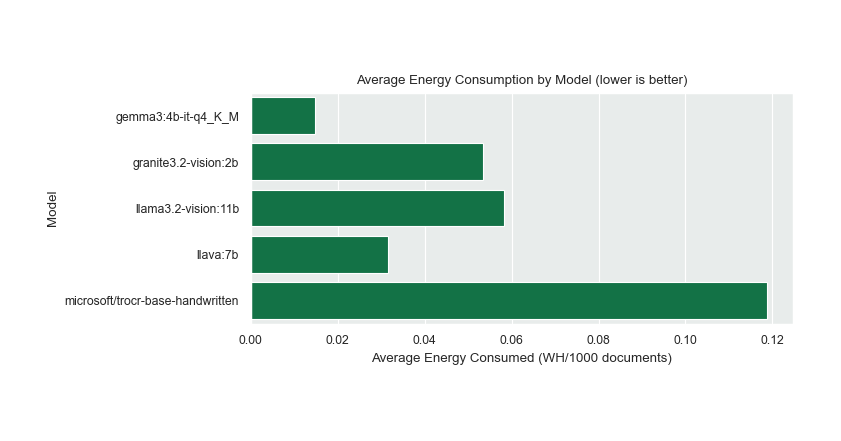
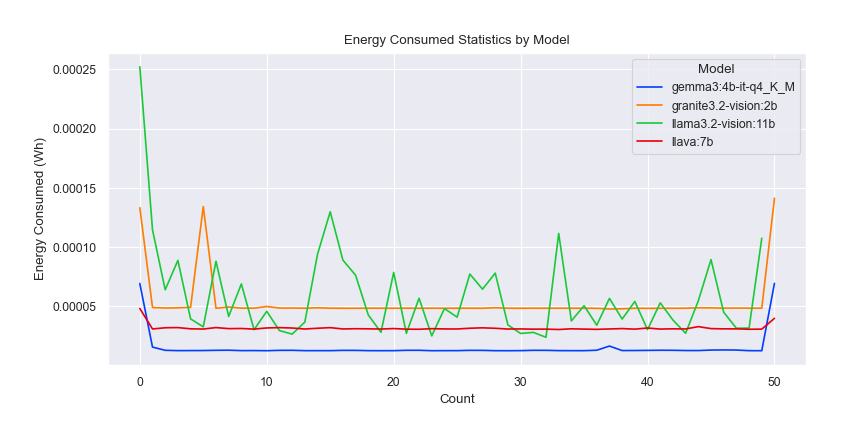
To circle back on Triodos's sustainability mission, deciding upon an algorithm for certain data 'helpers' would be strongly impacted by energy use. In this scenario, I explored several OCR (Optical Character Recognition) models to find the most energy efficient model. To ensure sovereignty over their internal tools, the requirement was that these would be local models.
In parallel, model candidates were benchmarked on energy, speed, and consistency. Across repeated tests, Gemma 3 emerged as the most suitable option, showing strong consistency with significantly lower energy use than even traditional OCR-based alternatives.
Key Decisions
We used five core decisions to connect research insights to the final concept:
Build one shared Data Hub instead of separate regional flows, to improve consistency.
Keep humans in control at critical moments, to reduce overreliance risk.
Use cognitive forcing functions at high-risk decision steps, to improve critical review quality.
Prioritise model selection by energy, consistency, and speed, not speed alone.
Include sustainability metrics in the product itself, so impact is visible and auditable.
Results
The final concept is a validated prototype of the Triodos Data Hub, a unified data quality workspace with assistant-supported validation, collaborative ticketing, and sustainability analytics. This was delivered to the Triodos team as it is up to them to implement this solution.

Aside from delivering a final product, some key outcomes are that AI can in fact be sustainable if used for a proper goal, local models can be reliable for OCR and can use significantly less energy than even the traditional OCR tools. Additionally, taking too much control from humans can lead to averse effects as users will blindly trust AI models rather than thinking for themselves.
Toolkit & Credits
Prototypes were developed using Figma and made interactive using Onlook AI, combined with a lot of old-fashioned sketching on paper. Methodology was taken from CMD Methods and various research papers, combined with self-created methods tailored to the project's needs.
Algorithms were made using Python and combined with Ollama to run local LLM- and VLM-models. All performance testing was done on a 2021 Macbook Pro M1 without any other programs open to ensure unbiased results.